
According to the commerce and industry ministry data, during April-February 2018-19, the eight sectors recorded a flat growth rate of 4.3 per cent over the same period previous fiscal.

Continuing its dismal performance, industrial growth fell further to 1.9 per cent in September, mainly due to poor output from the manufacturing sector.

What came to the rescue of the IIP numbers in February were mining and electricity.

The production growth of eight infrastructure sectors -- coal, crude oil, natural gas, refinery products, fertiliser, steel, cement and electricity -- was 19.3 per cent in May 2022, the data showed. In June, the output of coal, refinery products, fertiliser, cement and electricity rose by 31.1 per cent, 15.1 per cent, 8.2 per cent, 19.4 per cent, and 15.5 per cent, respectively.

India's industrial output grew a better-than-expected 6.4 per cent in August compared with a downwardly revised 4.1 per cent growth a month ago.

Output of the manufacturing sector, which constitutes over 75 per cent of the index, rose 8.5 per cent in January, compared to 8.1 per cent in the same month last year.

Coal, crude oil, natural gas, refinery products, fertiliser, steel, cement and comprise 40.27 per cent of the weight of items included in the Index of Industrial Production.
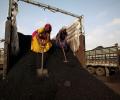
Led by healthy growth in coal, crude oil, fertilisers, cement and electricity production, output of eight core industries grew to a 13-month high of 18.1 per cent in May this year, according to official data released on Thursday. The growth of core infrastructure sectors expanded by 16.4 per cent in the year-ago period and 9.3 per cent in April this year. The last high growth was recorded in April 2021 when it was 62.6 per cent.
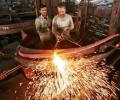
The November IIP has been revised upwards to 3.9% from 3.8%.

Slow growth in key sectors would also have implications on the Index of Industrial Production number

'We expect a pick-up in the second half of the current fiscal. But before that, data is likely to show a further slowdown. The second quarter print is likely to be worse than the first quarter,' said a senior official.

Pronab Sen, principal advisor in the Planning Commission, says that it is difficult to pinpoint the exact GDP number for the current fiscal, as IIP data is questionable and contradicts with exports growth story.
Domestic policies rather than the global turmoil is what will really affect growth prospects.
Huge gold imports have put pressure on the country's CAD, which in turn is affecting the value of rupee.
The Index of Industrial Production (IIP) for July 2007, released on September 12, showed the manufacturing sector decelerated to a growth rate of 7.2 per cent over July 2006, after many months of double-digit growth.

The growth is particularly remarkable because it comes at levels higher than during the pre-Covid times, notes Mahesh Vyas.

Expressing concerns over slow industrial production growth, industry today asked the Reserve Bank to cut rates in its policy review next month to boost investments and bring the growth back on track.

Production of eight infrastructure sectors expanded at a four-month high of 7.8 per cent in January 2023 on better show by coal, fertiliser, steel and electricity segments, according to official data released on Tuesday.

Analysts believe that investors should look at stocks that hit 52-week lows only if they have a dividend paying track record, are debt-free and have sound fundamentals.

"We believe in the coming months of September and October, the manufacturing growth is likely to remain flat and IIP growth may even continue to remain in the negative territory," SBI Research said in its Ecowrap Report.

Poor performance of coal, petroleum refinery products and natural gas pulled down the core sector growth to 2.1 per cent in December, 2013 from 7.5 per cent in the same month a year ago.

Natural gas output rose by 6.4 per cent in June.

It is pegged at 6.8-8% by various economists, as compared to 6.7%.

Inflation data, global trends and foreign fund trading activity would guide equity market movement in a holiday-shortened week, analysts said. Stock markets would remain closed on Tuesday for Independence Day. "Macroeconomic indicators, rupee and FII activities will be pivotal in shaping market trends in the coming days.

Factory output, measured in terms of Index of Industrial Production, showed an improvement mainly because of an uptick in mining and manufacturing production and larger offtake of capital goods.
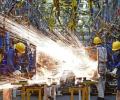
Industrial production declined by 10.4 per cent in July, mainly due to lower output of manufacturing, mining and power generation, as per the government data released on Friday.
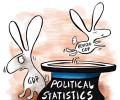
The SBI report, however, said the economic growth rate will pick up pace in 2020-21 to 6.2 per cent.
The high growth rate over the last few years has been more cyclical, than structural, in nature. And continued supply side bottlenecks will necessarily mean that periods of high growth will trigger inflationary pressures.
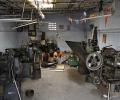
Small and medium enterprises have been struggling to raise bank credit even as they have been powering India's manufacturing growth in recent years.

Finance Minister Nirmala Sitharaman is likely to step up efforts to boost consumption and rural economy while keeping inflation under check when she presents her sixth straight Budget on February 1. Experts said one way to boost consumption is to put more money in the hands of people, and one of the possible ways of doing it is by reducing the tax burden through tinkering with tax slabs or increasing the standard deduction. Another proposal is related to increasing the funds under the rural employment guarantee scheme MGNREGA and higher payout for farmers.

Cement production contracted by 2.7 per cent as against an expansion of 6.2 per cent in October 2016.

Mining output climbed 23.3 per cent and power generation increased 7.5 per cent in May. The IIP had contracted 33.4 per cent in May 2020. Industrial production has been hit due to the coronavirus pandemic since March last year when it had contracted 18.7 per cent. It shrank 57.3 per cent in April 2020 due to decline in economic activities in the wake of the lockdown to curb the spread of coronavirus infections. The IIP had registered a growth of 5.2 per cent in February last year.

Industrial production expanded a provisional 3.4 per cent year-on-year in June.

Participants are eyeing the Bihar elections.

The eight sectors, which also include fertilisers, steel, natural gas, electricity and crude oil, had expanded by 1 per cent in June last year.

Except for crude oil, natural gas and fertilisers, all other segments registered healthy growth.
According to the data released by the government, the capital goods segment in the overall industrial output rose by 63 per cent in July and pushed up the Index of Industrial Production (IIP) by 13.8 per cent.
India's industrial production slowed down to 8.6 per cent in February 2008, compared to 11 per cent a year-ago, but belied apprehensions of a major slowdown after dismal figures for the previous month, giving RBI some headroom to tighten money supply for combating the surging inflation.
After contracting for the first time in 15 years in October, industrial production again crashed by two per cent in December against a growth rate of a whopping 8 per cent a year ago despite a stimulus package announced by the government to boost sagging demand.

The expansion in September is highest since April, when the core sectors' growth stood at 2.6 per cent.
